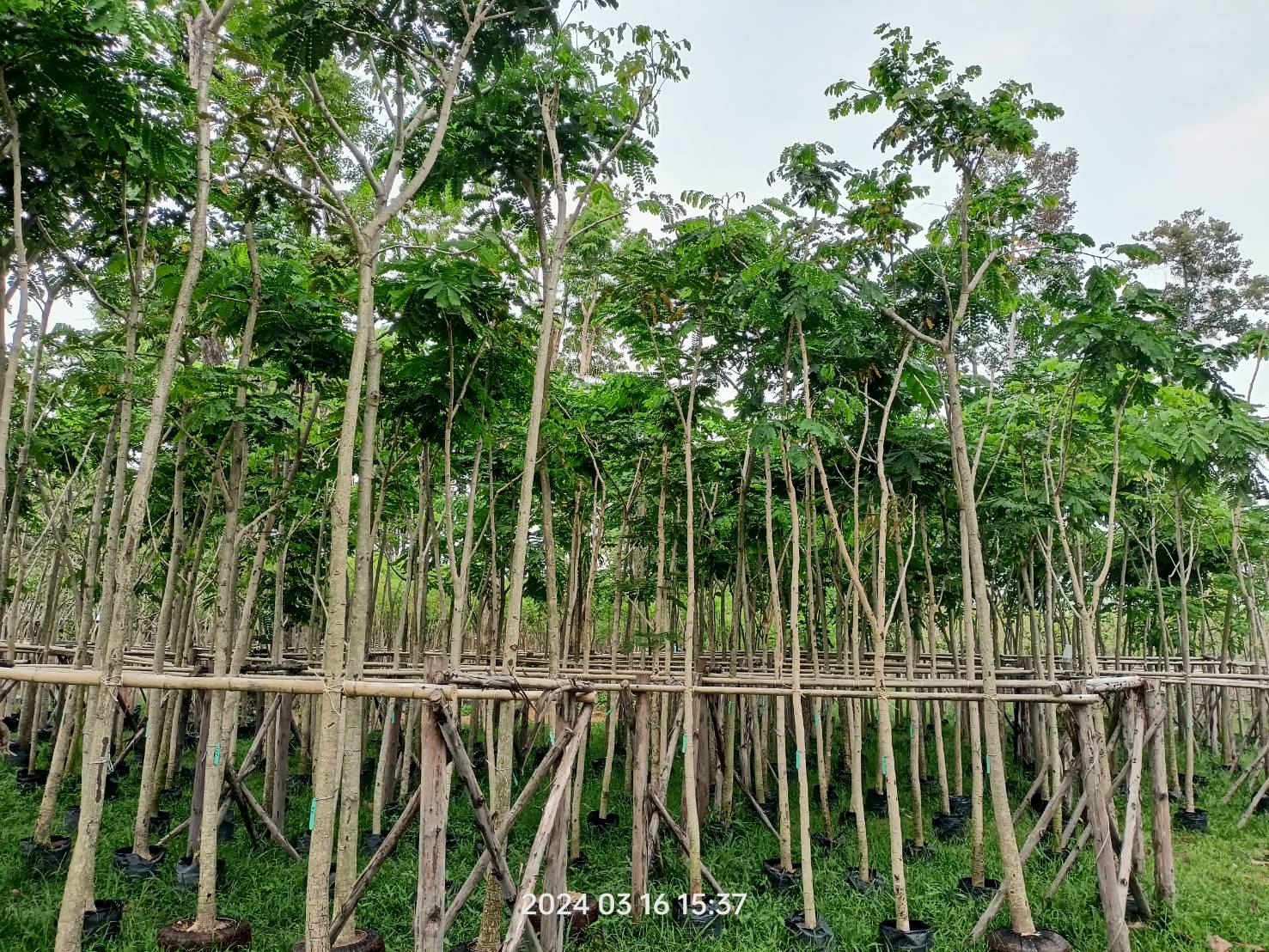
Albizia lebbeck
Albizia lebbeck is a large deciduous shade tree with fragrant, pale flowers.
About the plant
Albizia lebbeck is a large deciduous shade tree with fragrant, pale flowers.
Growth
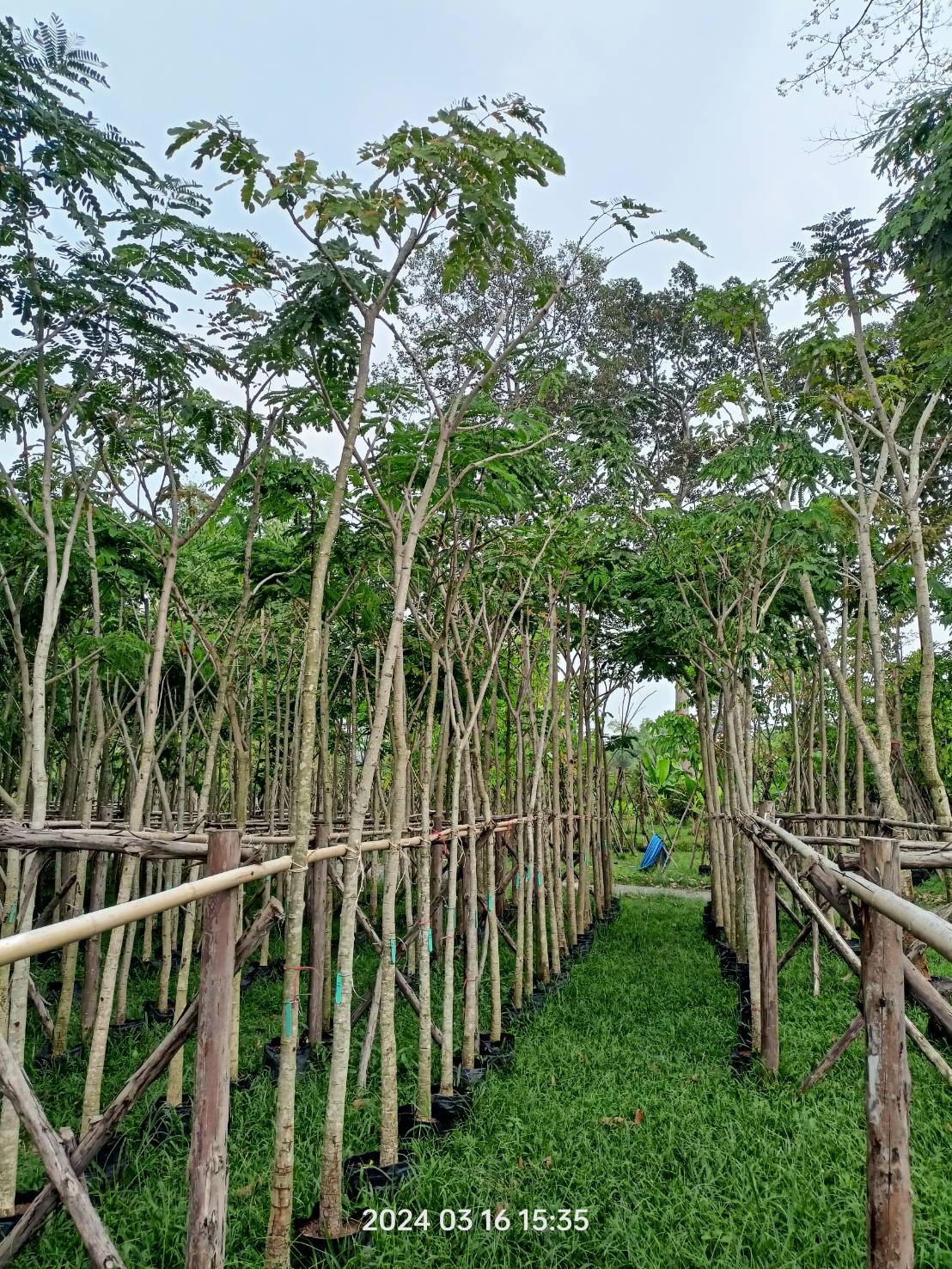
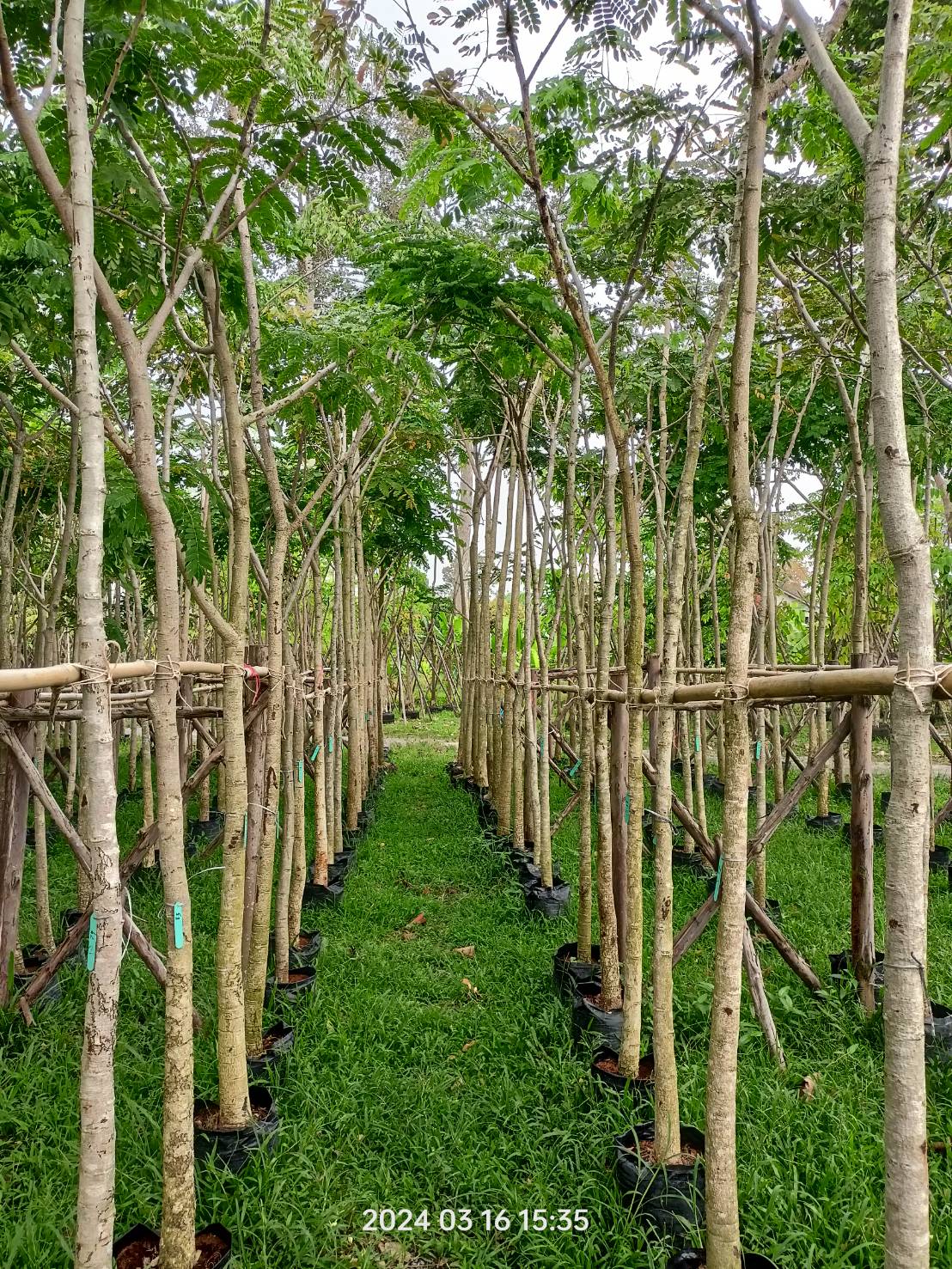
Mature height is commonly 15–20 m, with records up to 30 m. These are species dimensions, not the sizes of trees offered for sale.
Appearance
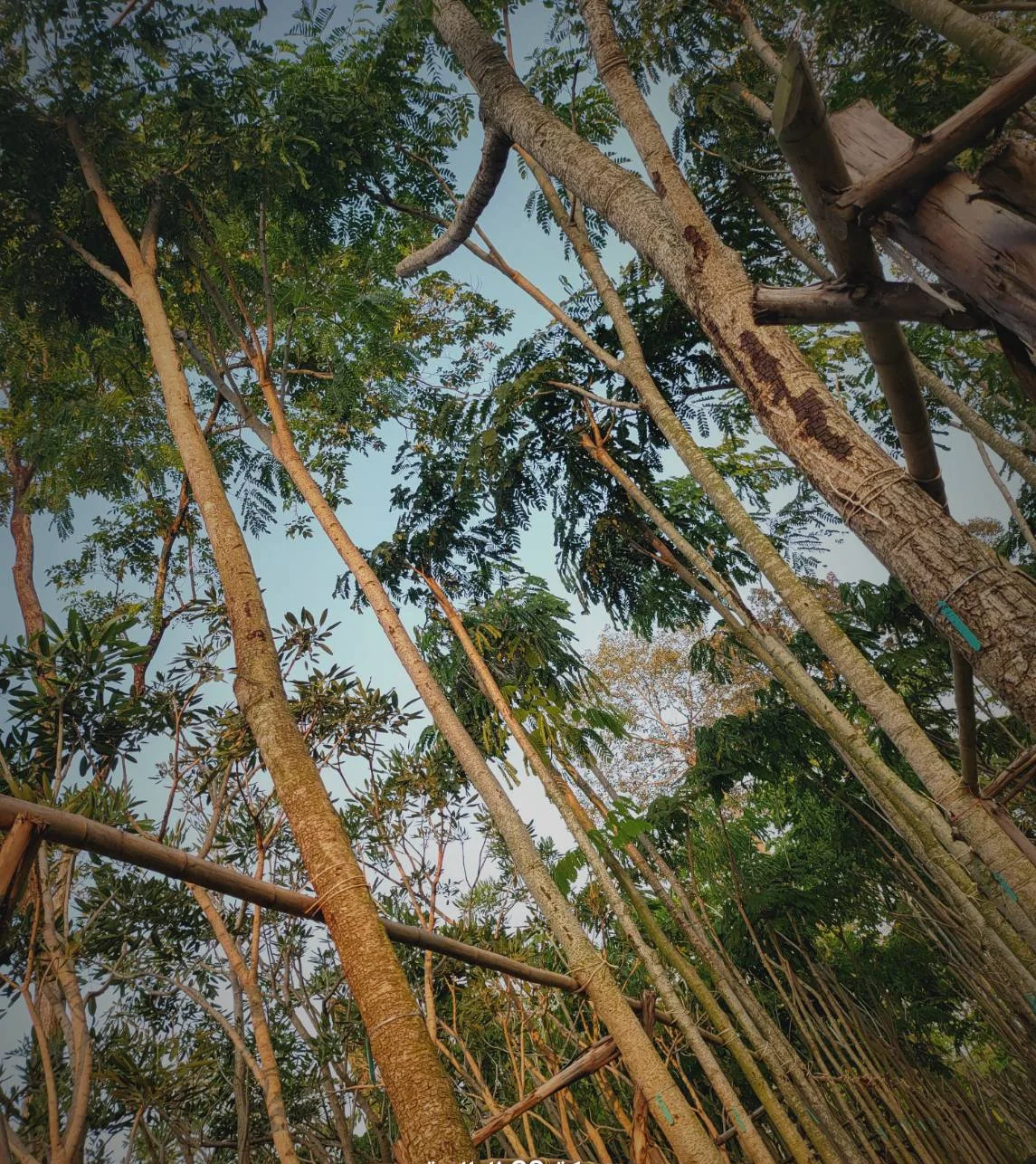
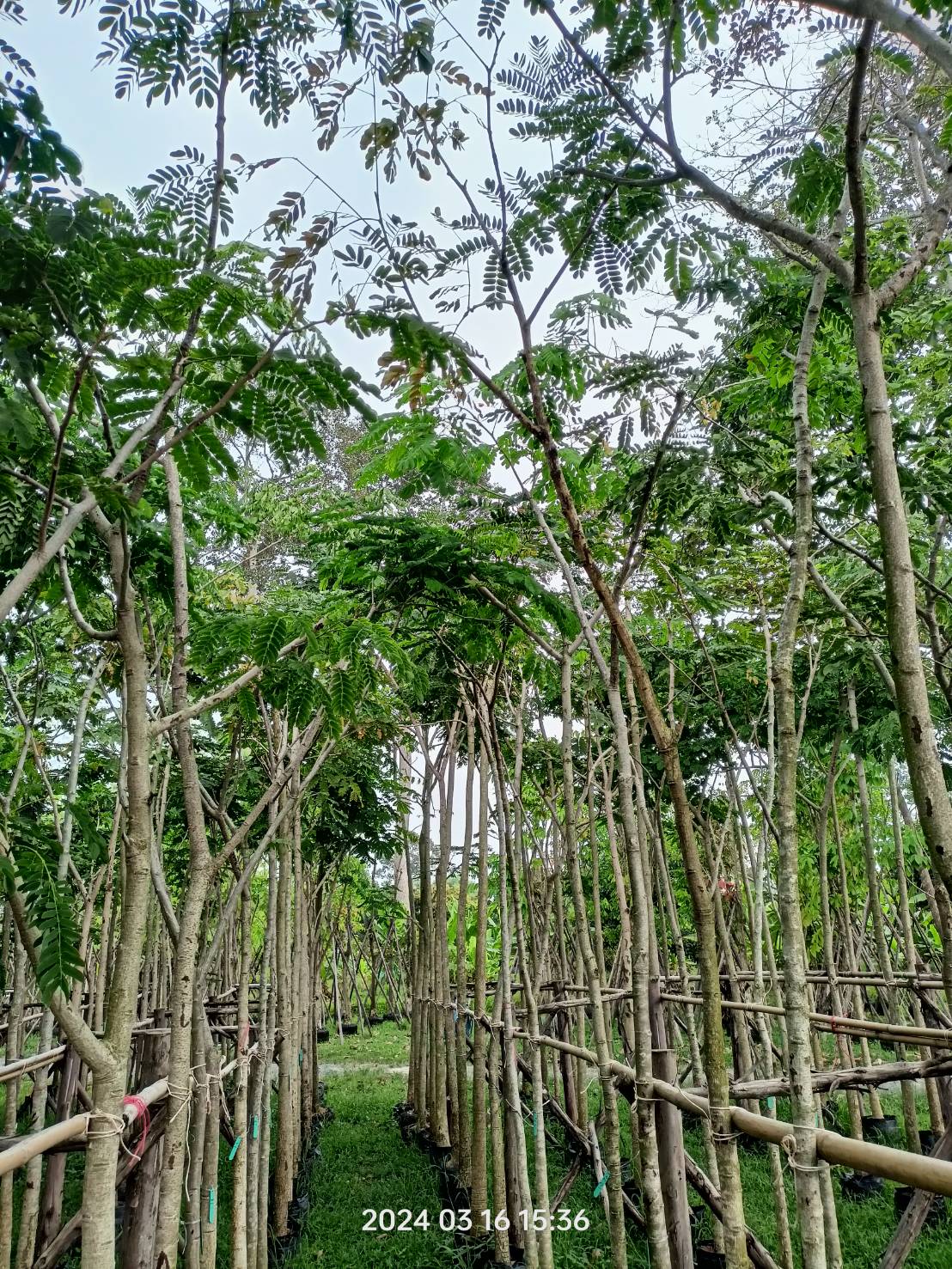
Leaves are twice pinnate. Open-grown trees develop spreading crowns; mature pods are flat and pale brown.
Flowering
Fragrant white to cream flowers accompany renewed growth near the end of the dry season. Timing varies with local climate.
Uses
Used for shade in plantations and along avenues; its flowers attract bees.
Light
Choose a very bright site; FAO classifies the species as requiring very high light intensity.
Water
Drought tolerance is documented after the first growing year. This does not prescribe irrigation for newly transplanted trees; assess their roots and site soil.
Soil
Well-drained soil is suitable. FAO records an optimum soil pH of 6–7; assess local soil and drainage conditions.
Climate
Its natural biome is seasonally dry tropical. A biome description alone does not establish suitability for every city.
Temperature
Frost can kill young top growth, with regrowth from the base in warmer conditions. No single frost-survival guarantee is given.
Native range
Kew places its native range from the Indian subcontinent to Myanmar, and lists Thailand and Malaya as introduced regions.
Propagation
Propagate from seed or seedlings. The ICRAF manual describes hot-water treatment followed by cooling and a 24-hour soak.
Pruning
It responds to pruning and coppicing, and exposed roots can produce suckers.
Roots
Roots are near the soil surface. Setbacks from structures require site assessment; no universal distance is prescribed.
Pests
Recorded problems include root and stem rots, rust and wood or seed borers. A damaged tree needs inspection for diagnosis.
Safety
Vulnerable to strong winds and fire.
Environment
The 2026 UF/IFAS assessment advises preventing escape in central and south Florida. This is local guidance; review the destination's planting or export requirements.
- SEE-OFFER-000004 · 100